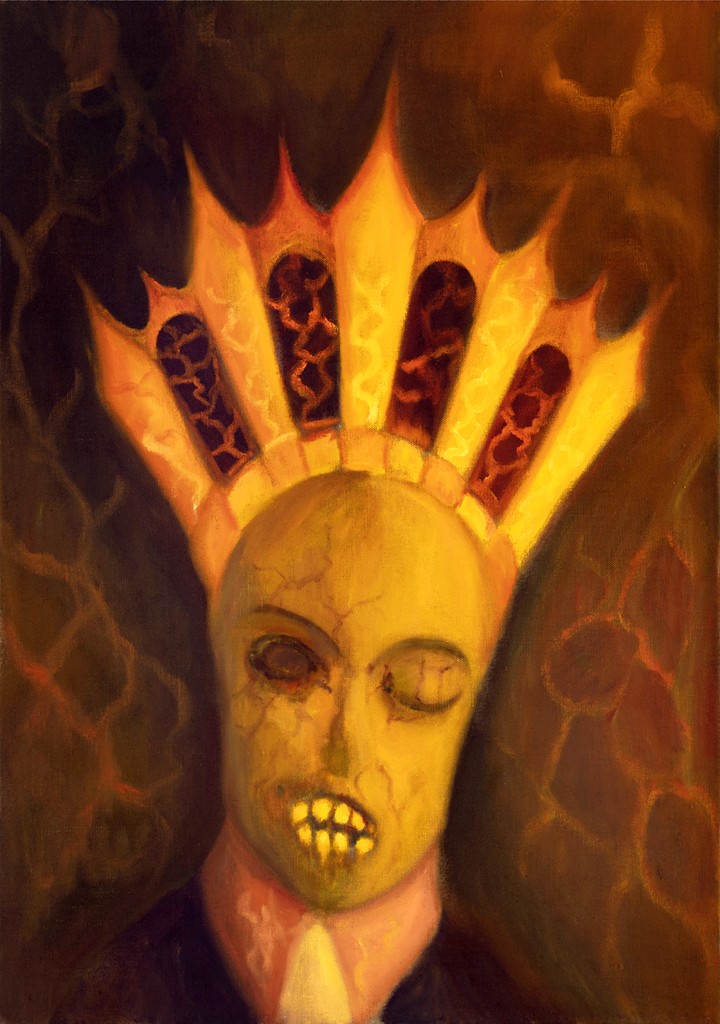
Ani zlaté zuby nebožtíka nevydrží žár, který tělo během kremace pozře. Za dvacet minut se tělo změní v prach, podobající se bílému písku. Jsou v něm černé kousky dřeva – zbytky dřevěné rakve. Za života byla slečna kousavá. Hrubá jako oblečení na motorku. Ostrá jako břitva. Vyjadřovala se rozzlobeným až hněvivým tónem. Zřídka sarkasmem. Ten už vyžaduje abstrakci a kreativní myšlení. Překonat rozpor mezi doslovným a skutečným významem nedokázala. Nadhled a smysl ji po celý život zůstal cizí. Měla jen proříznutou pusu. Plnou zlatých zubů. Brzdové destičky ji scházely. Písek na mořské pláži za setmění připomíná písek na mořské pláži lidský prach. Vzpomínka a prach. To z ní zůstalo.
Golden teeth
Not even the gold teeth of the deceased can withstand the heat that consumes the body during cremation. In twenty minutes, the body turns to dust, resembling white sand. There are black pieces of wood in it—remnants of the wooden coffin. During her lifetime, the young lady was sharp-tongued. Rough as motorcycle clothing. Sharp as a razor. She expressed herself in an angry, even wrathful tone. Rarely with sarcasm. That requires abstraction and creative thinking. She was unable to overcome the contradiction between the literal and the real meaning. Perspective and meaning remained foreign to her throughout her life. She only had a sharp tongue. Full of gold teeth. She lacked brake pads. Sand on the beach at dusk resembles human dust. Memories and dust. That's what remained of her.